Delivery drones get their first city rulebook
Harbor Point's council voted to allow drone deliveries on fixed corridors with strict noise limits. Other cities are watching how it goes.

· 1 min read
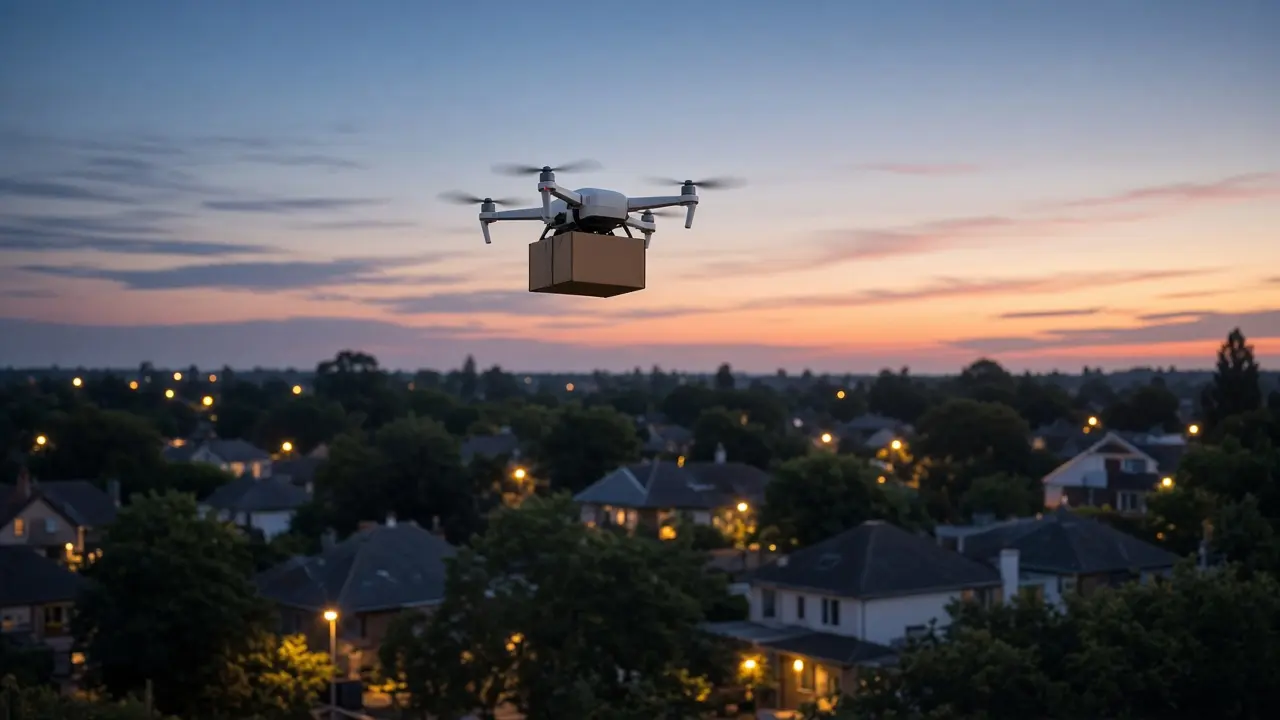
Harbor Point’s city council voted 7–2 on Tuesday to allow commercial drone deliveries inside city limits, making it one of the first mid-sized cities to write its own local rules for the aircraft.
The ordinance lets operators fly only along approved corridors, mostly above rail lines, rivers, and major roads, and bans flights over schools and parks during the day. Drones must stay under a noise limit measured at street level, and operators must publish monthly flight logs.
Why the city acted
Drone companies have been testing in Harbor Point for two years under temporary permits. Residents complained about noise, privacy, and drones hovering over backyards. Council members said they wanted rules in place before deliveries scaled up, not after.
“We learned from scooters,” said council member Rosa Delgado, who sponsored the ordinance. “If you wait until they’re everywhere, you’re writing rules in a hurry.”
What’s in the ordinance
- Corridors. Flights must follow mapped routes. Deliveries leave the corridor only for the final drop.
- Noise. A cap on sound at ground level, with fines for repeat violations.
- Hours. No flights between 9 p.m. and 7 a.m.
- Data. Operators must report routes, flight counts, and incidents monthly. Cameras can be used for navigation only, not recording.
“If you wait until they’re everywhere, you’re writing rules in a hurry.”
The objections
The two council members who voted no argued the corridors would concentrate noise on neighborhoods near rail lines, which tend to be lower-income. The final ordinance includes a review after one year to look at exactly that.
Drone operators were mostly supportive, though one warned that strict hour limits would make evening grocery delivery impractical.
What happens next
Airspace above cities is mostly governed by national regulators, so the ordinance focuses on what a city can control: takeoff and landing sites, noise, and data. Legal experts expect the line between local and national authority to be tested.
The rules take effect in March. Several neighboring cities have asked Harbor Point for copies.
- drones
- cities
- regulation